West Virginia

Hard Water & Your Water Heater: Fighting Scale Build-Up in PA and WV
Relax... Leave Your Comfort to Us!
5.0

Rating by 1414+ Customers

Living in Southwestern Pennsylvania and North Central West Virginia comes with distinct regional perks: scenic rolling hills, distinct seasonal changes, and historic homes filled with character. However, our regional geology presents a persistent challenge beneath the surface: hard water.
Whether your home draws from municipal supplies or private wells across Pittsburgh, Morgantown, or the surrounding communities, the water in our region contains heavy concentrations of dissolved minerals like calcium and magnesium. While these minerals pose no risk to your health, they are relentless enemies of your home’s water heating system.
Over time, hard water mineral deposits form a dense, rock-hard layer of limescale inside your water heater tank. Absolute Heating & Air provides trusted heating, cooling, and water heater services across our region. This guide breaks down how scale build-up compromises your water heater, the warning signs to watch out for, and how annual professional maintenance protects your investment.
Why Mineral Scale Settles and Creates an Insulating Barrier
Understanding how hard water damages your water heater starts with basic physics and water chemistry. As cold water enters your water heater tank, it holds dissolved calcium and magnesium in liquid suspension. However, the moment that water heats up, its chemical capacity to hold those dissolved minerals drops significantly.
The minerals separate out of liquid solution, forming tiny solid particles of calcium carbonate that sink directly to the floor of the tank. As month after month of heating cycles pass, this sediment bakes under high temperatures, transforming into a thick, concrete-like layer of limescale.
The Thermal Barrier Effect
This mineral blanket creates a severe operational problem for both gas and electric water heaters:
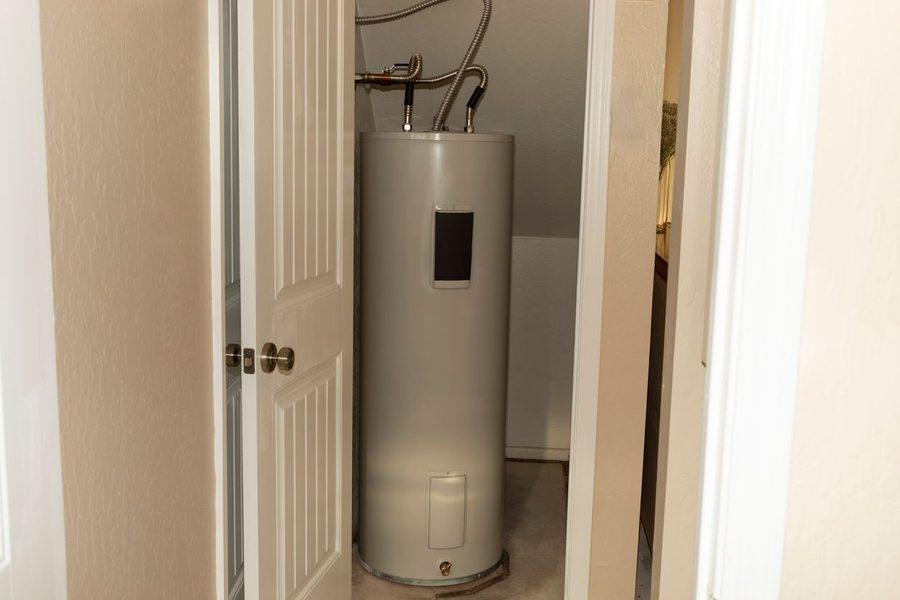
- Gas Water Heaters: The gas burner sits directly beneath the bottom of the steel tank. When a dense blanket of mineral scale coats the interior tank floor, the heat from the flame cannot pass cleanly into the water above. The scale acts as a thermal insulator, trapping intense heat inside the bottom steel plate.
- Electric Water Heaters: Electric units rely on upper and lower heating elements submerged directly inside the water. As sediment accumulates, it buries the lower heating element in a mound of mineral sludge. Trapped beneath the sediment without water to absorb its thermal energy, the lower element rapidly overheats and burns out.
Instead of efficiently transferring heat into your water, your system spends double the energy trying to force thermal energy through a thick blanket of stone, driving up your utility bills and severely overworking the equipment.
Warning Signs of Sediment Build-Up in Your Water Heater
Mineral scale does not accumulate quietly. As sediment builds up inside your tank, your water heater will show clear physical and performance indicators that it is struggling under thermal stress.
Deep Rumbling or Popcorn-Like Noises
If your water heater sounds like a pot of boiling popcorn or makes loud, deep rumbling sounds during a heating cycle, sediment is the culprit. Water gets trapped in pockets beneath the hard layer of mineral scale along the bottom of the tank. As the burner heats that trapped moisture, it flashes into steam, creating mini-steam explosions that crack through the hard scale layer.
Metallic-Tasting or Discolored Hot Water
High mineral concentrations combined with interior tank degradation can alter the quality of your hot water. If your hot water develops a faint metallic taste, a gritty texture, or a reddish-brown tint, mineral scale is actively breaking down inside the tank.
Sudden Drops in Hot Water Volume
If your morning shower suddenly turns lukewarm halfway through, your tank’s storage capacity has likely dropped. A heavy layer of mineral scale can displace several gallons of usable water space inside the tank. Furthermore, because the sediment acts as an insulator, the system takes significantly longer to heat incoming cold water, leaving your household running short on hot water.
How Annual Professional Flushing Protects Your System
While mineral scale buildup is inevitable in Southwestern PA and North Central WV, catastrophic system failures are entirely preventable. The most effective way to eliminate sediment and preserve your system’s operational efficiency is through annual professional water heater maintenance and flushing.
An annual professional maintenance visit by an Absolute Heating & Air technician goes far beyond simply turning a drain valve. Our comprehensive water heater maintenance service includes:
Safe Extraction of Baked-On Sediment
Over time, sediment hardens into heavy chunks that clog standard plastic drain valves. Our technicians utilize specialized equipment to flush the tank under controlled pressure, breaking up hardened mineral scale and sweeping heavy sediment deposits entirely out of the system.
Protecting Heating Elements from Thermal Burnout
By removing the mineral blanket burying your lower electric heating element or insulating your gas burner plate, professional flushing restores direct contact between the heating surface and your water supply. This drastically drops operating temperatures, preventing premature element burnouts and heat-exchanger cracks.
Preventing Structural Tank Ruptures
When a gas burner is forced to fire through inches of mineral scale, the bottom steel tank plate reaches temperatures far beyond its factory design limits. This intense overheating weakens the steel, destroys the glass lining inside the tank, and accelerates corrosion. Left unserviced, the constant thermal stress leads directly to structural tank fractures and catastrophic basement flooding. Annual flushing keeps operating temperatures balanced, preserving the internal steel shell and maximizing your equipment’s lifespan.
Secure Reliable Hot Water for Your Home
Taking a proactive approach to your home’s water heating infrastructure is the most effective way to lower your monthly utility costs and eliminate sudden breakdown anxiety. While keeping an eye on your system for unusual rumbling noises is an excellent household habit, executing deep pressure flushes, checking thermal safety valves, and testing electrical heating elements requires specialized tools and certified trade training.
Hoping an unmaintained, scale-choked water heater survives another winter is a risky gamble that guarantees high energy bills and sudden cold showers. Making the investment to schedule an annual professional water heater flush ensures your equipment operates at peak factory efficiency, delivers consistent hot water, and protects your home asset for years to come.
You do not have to let hard water minerals ruin your home’s water heater. Contact Absolute Heating & Air today to schedule your water heater service!
Relax... Leave Your Comfort to Us!
Rely on our team to keep your heating and cooling systems running smoothly with service designed for long-term performance. We focus on dependable workmanship and consistent comfort you can count on year-round.